Splatting Notes 1: How It Started
Gaussian Splats are great! I first heard of them in winter 2025, when Apple released a model for turning flat images into 3D scenes. I made a few and used the app MetalSplatter to view them on my Vision Pro. It was so exciting! It seems to me we are headed toward a Star Trek-style Holodeck, which, to my mind, represents the terminal media format. For that reason, I like to call Gaussian splat scenes “holograms.”
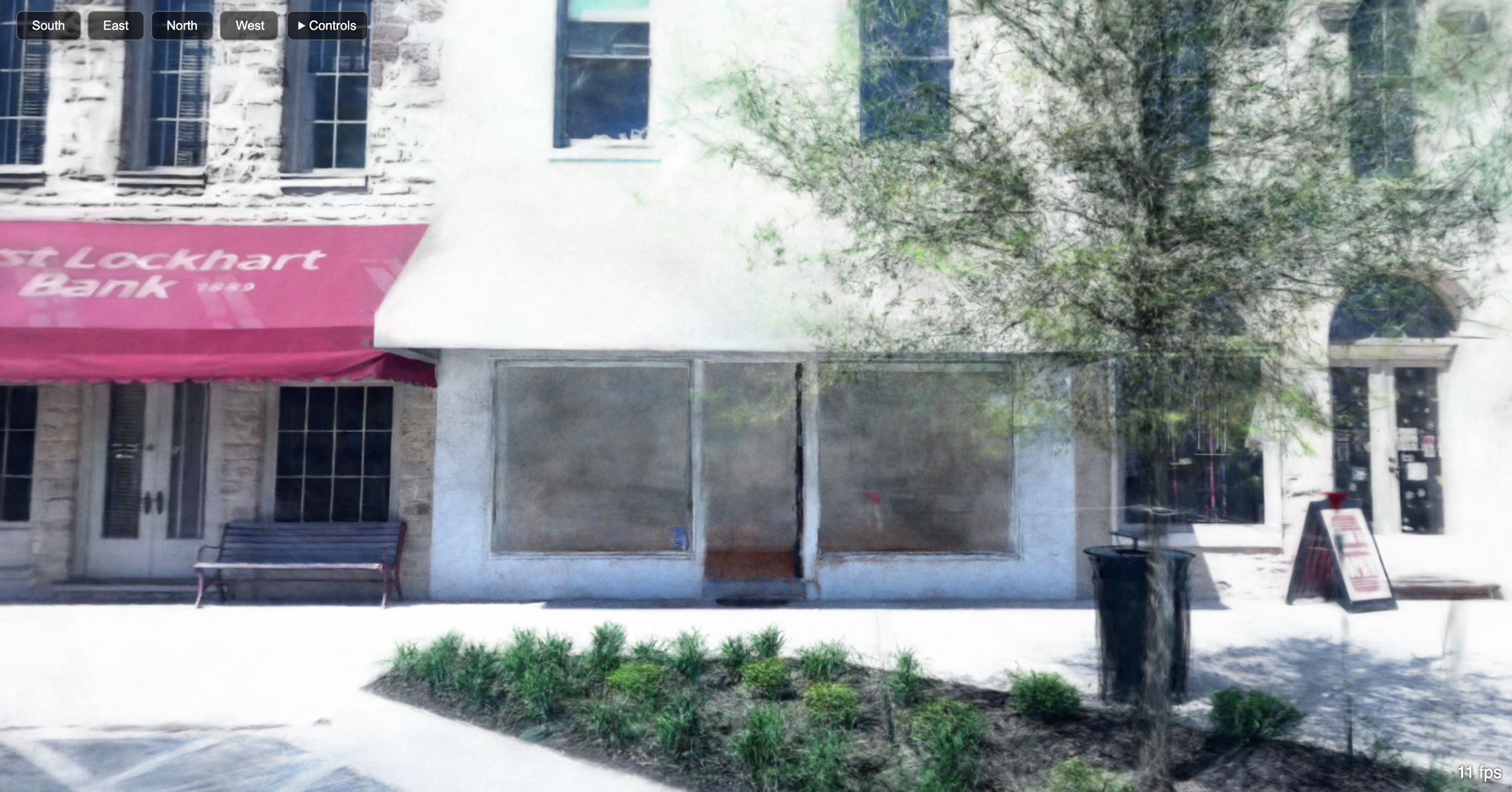
Scenes are made up of floating shapes called Splats, which is itself wonderful! I really like how much they look like brushstrokes, which gives me an intuitive sense that they’re resonant with old ideas about making images, and may be the real deal.
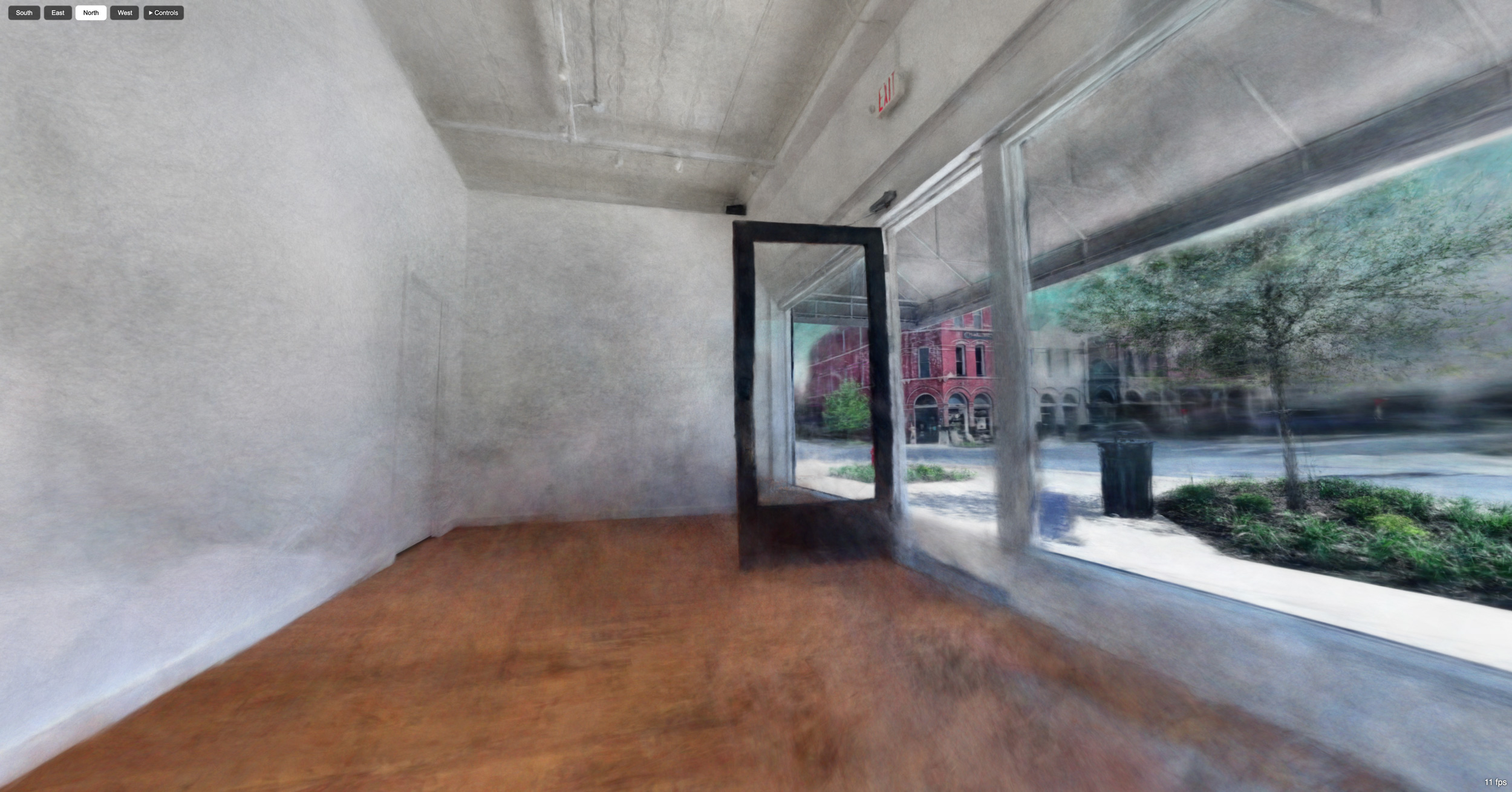
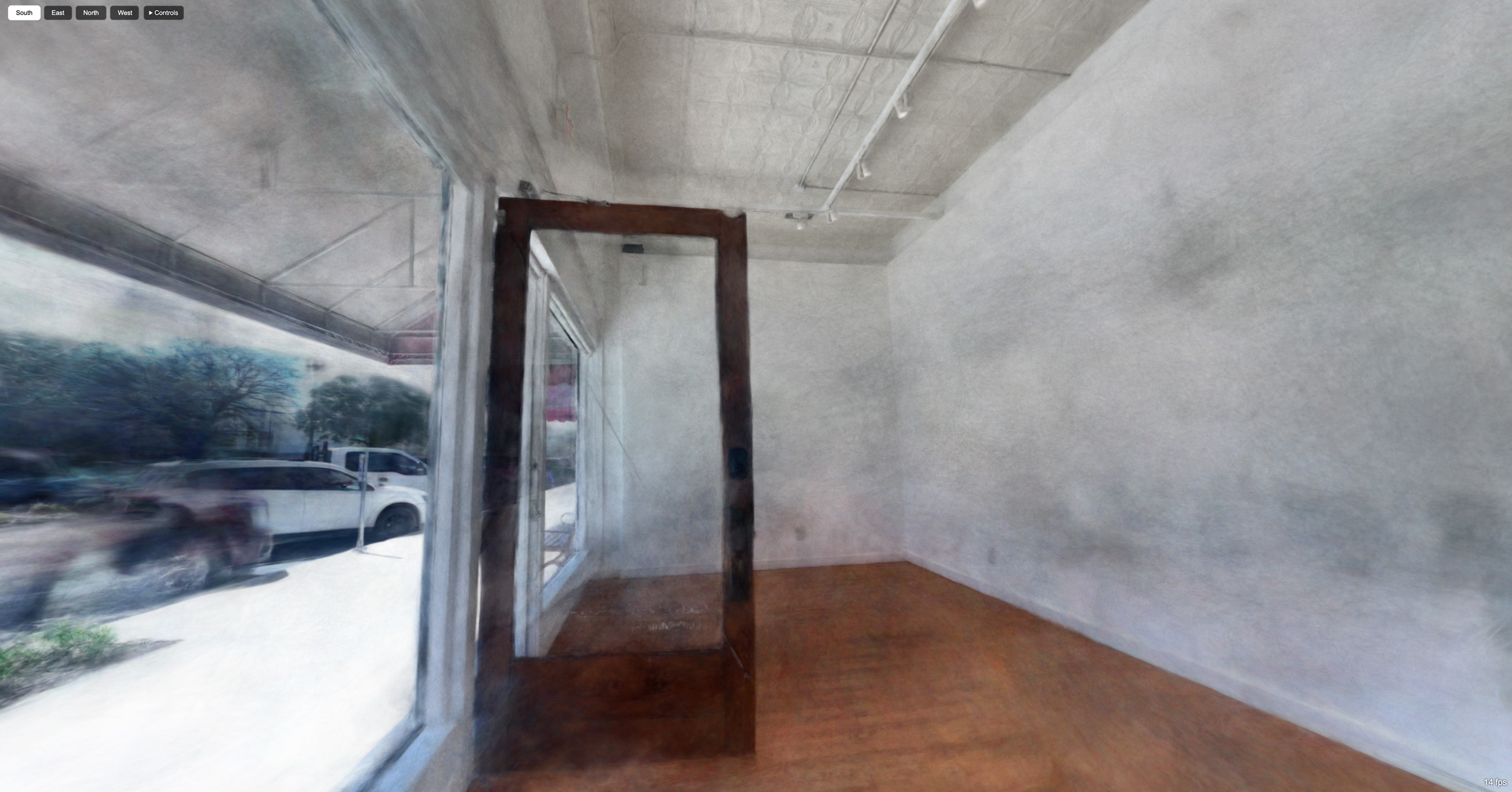
Around the time of my first experiment, the gallery at Spellerberg Projects had just been reset for install, and I thought it would be fun to create an empty “reference” scene. I did the capture on an iPhone X (I love my old phone!). I read how important it is to lock exposure and white balance, so I used the Blackmagic Cam app. And I captured video. For processing, I used an M2 MacBook Air.
With this scene, I was introduced to a problem I’m still (as of this writing) dealing with: flat white walls. Scenes are made by examining multiple photos of an object to determine the placement, color, and other attributes of the individual splats. But a flat white wall doesn’t have distinctive visual features the trainer can use to place the splats. Bad news for us, since contemporary art gallery walls are flat white!
This scene [link] came from that capture. You can see the ghostly floaters in the room, and the patchiness. So that needs to be solved. But it’s fun! I also posted it on the gallery website with our Open Call, alongside traditional floor plans so that artists could get a sense of our space.
After that, I borrowed a friend’s iPad Pro, which has a LiDAR sensor. We captured an exhibition in the gallery, and I forget what app we used, but I learned what happens when you don’t lock the exposure and white balance: unusably bad results (for my use case, at least). I’ll go into the mechanism underlying that in a later post.
Posted October 2026