Splatting Notes 4: The Ghost Room
My dataset for Cristina Velásquez’s exhibition consists of several photo captures and one LiDAR capture (see previous post). There’s a lot going on with combining them, and I’ll go into it in more depth in later posts. But I wanted to highlight one visually distinctive thing that happened early in the process.
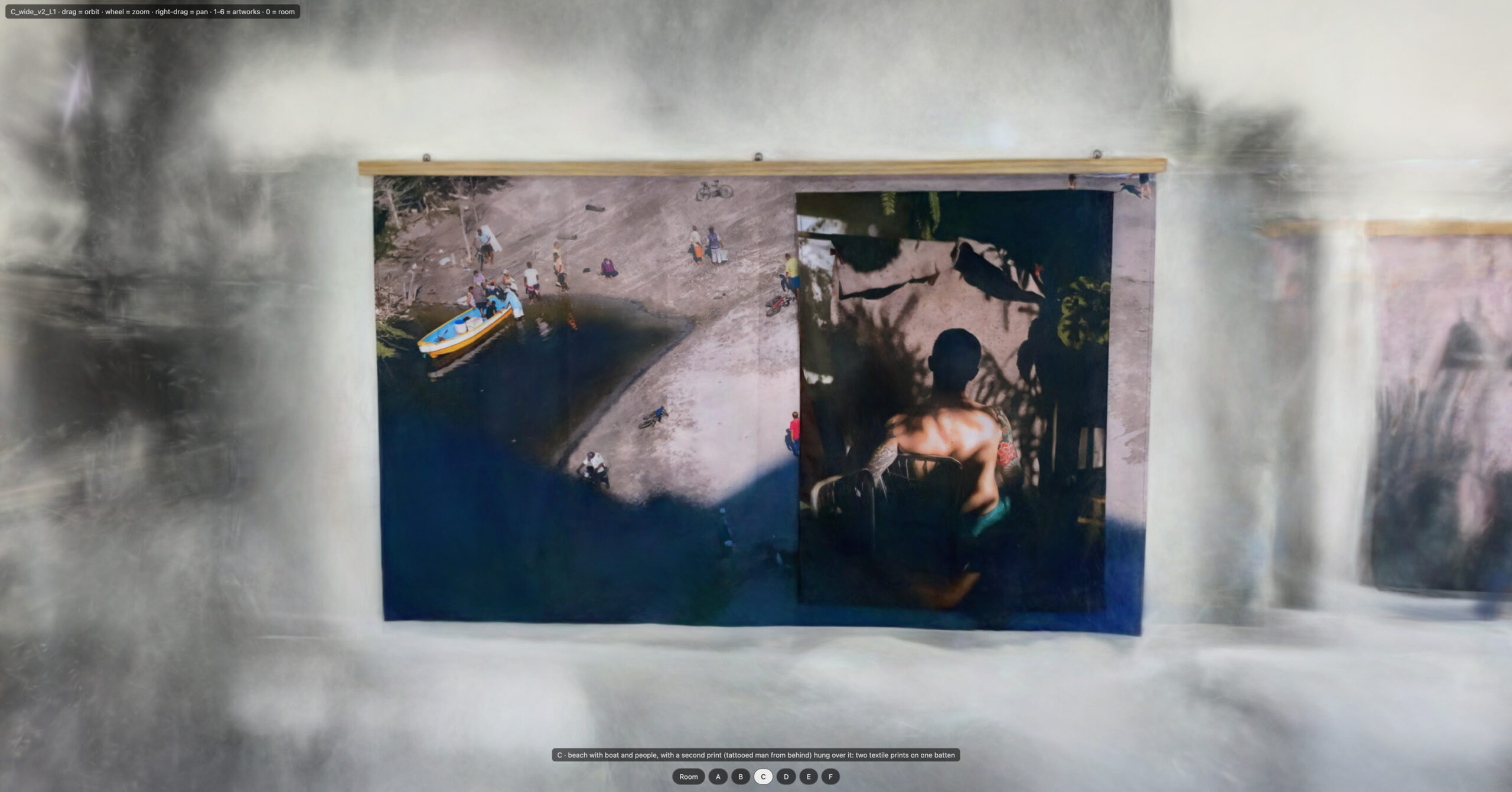
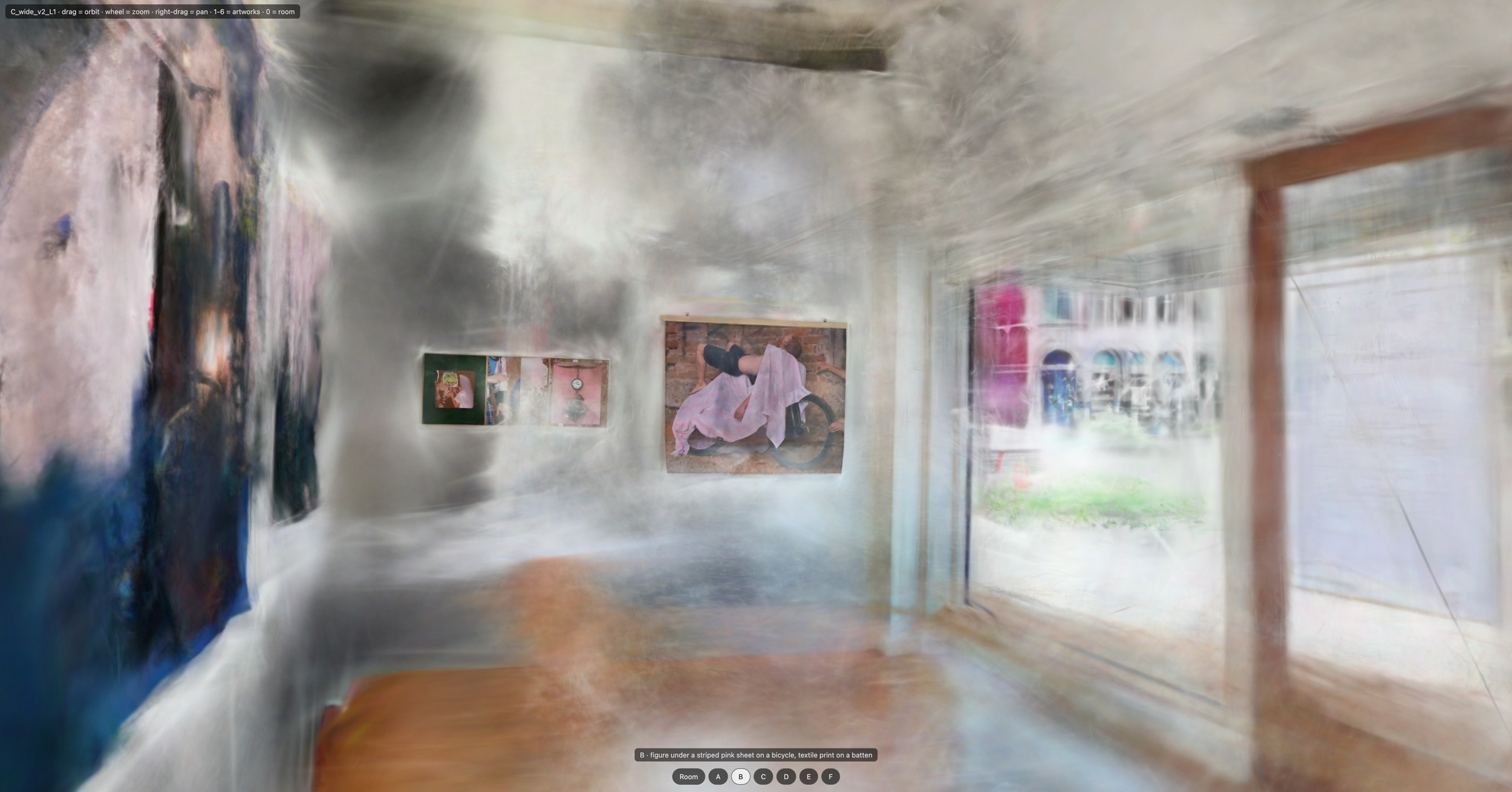
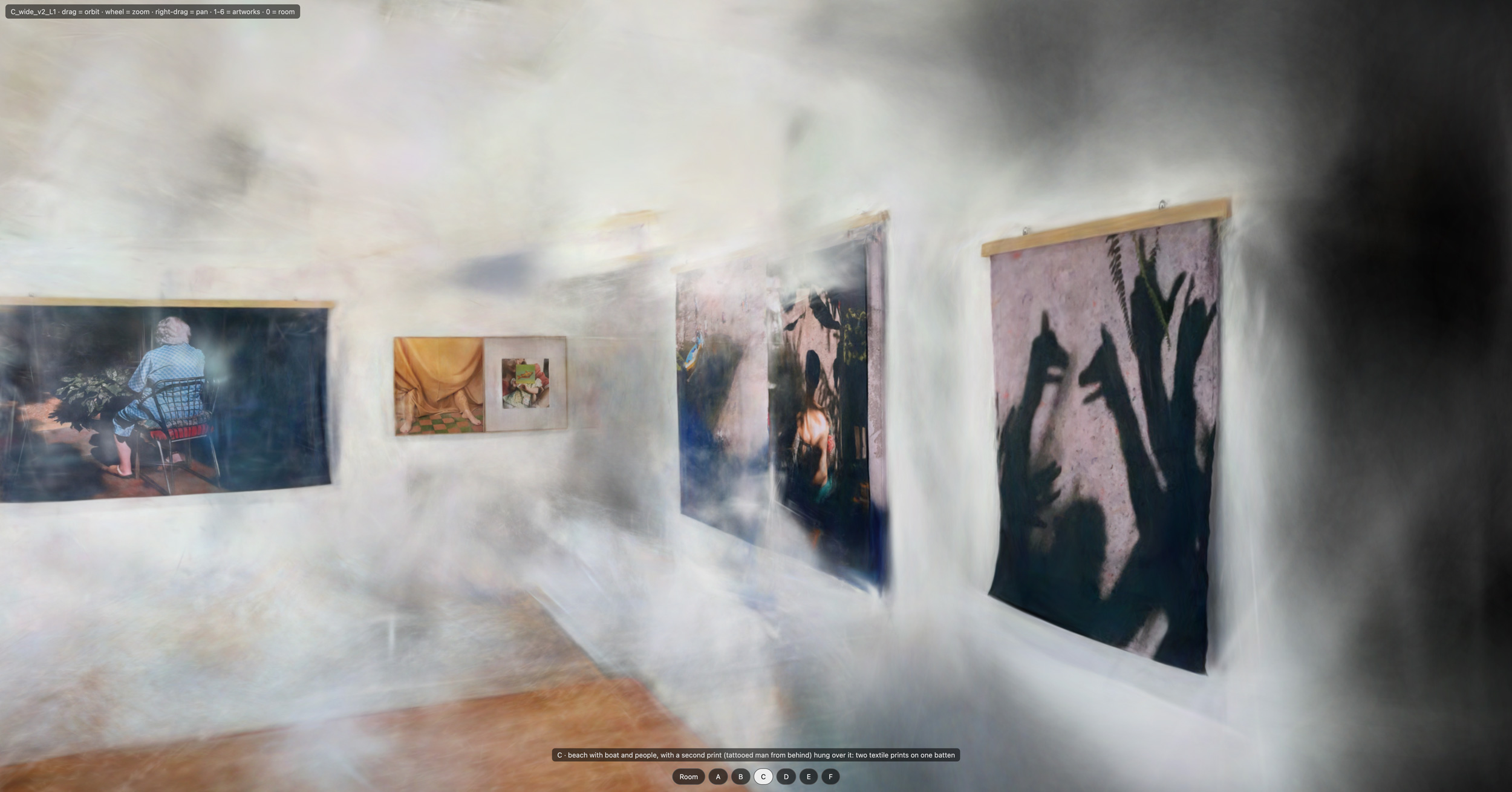
Our earliest scenes came out with a large amount of material floating in the middle of the room. We discovered that when we combined the LiDAR and photo data, the scale was miscalculated. We use COLMAP to prepare the spatial coordinates, and COLMAP normally chooses its scale arbitrarily. But the ARKit LiDAR data gives us an exact scale for the room. These two didn’t match. Training began with LiDAR data, and the points floating in the middle of the room were the first points laid down. Then the training switched to a larger scale and laid down the rest of the points. Claude fixed the calculation so the image data agreed with the LiDAR data, which resolved the issue. We’re also (and I have to take Claude’s word for this) running a post-training pass on the splats, removing splats that are a certain distance from the LiDAR geometry.
I don’t recall whether it was Claude or I that started calling it the Ghost Room, but it was evocative, and it stuck. My goal for this project is to learn how to make absolutely pristine captures of my exhibitions, but I am enjoying the aesthetics of some of these artifacts along the way.
Posted October 2026